Stamped & Decorative Concrete
Get the look of stone, brick, or tile with the durability and low maintenance of concrete.
Why Choose Stamped Concrete for Your Property
Stamped concrete gives you the upscale appearance of natural stone, brick pavers, or slate tile without the high cost or maintenance headaches. We pour concrete just like a regular slab, then imprint patterns into the surface while it is still workable. The result looks remarkably like the real material but costs 30 to 50 percent less and requires far less upkeep.
The durability advantage matters in Western New York. Natural stone and pavers shift over time as the ground freezes and thaws. Individual pavers can sink, creating trip hazards and uneven surfaces. Weeds grow between pavers no matter how well you seal the joints. Stamped concrete stays solid and level because it is a single slab. You will not spend weekends pulling weeds or resetting sunken pavers. A quick cleaning once or twice a year keeps stamped concrete looking great.
Design flexibility is another huge benefit. You can choose from dozens of patterns including cobblestone, ashlar slate, wood plank, herringbone brick, and random stone. Color options range from subtle earth tones to bold accent colors. Many homeowners combine multiple colors or add borders and accent bands to create truly custom designs. We help you pick patterns and colors that complement your home's style and landscaping. Whether you want an elegant entryway that enhances your home's curb appeal or a backyard retreat that feels like a luxury resort, stamped concrete delivers.
Popular Applications for Stamped Concrete
Patios rank as the most popular use for stamped concrete. A stamped concrete patio transforms your backyard from plain concrete to an outdoor living space that looks like it cost twice as much. You get all the benefits of a durable concrete surface with the visual appeal of natural materials. Pool decks also work beautifully with stamped concrete, especially patterns that mimic natural stone or travertine.
Where stamped concrete makes the biggest impact:
- •Patios and outdoor living areas
- •Front walkways and entryways
- •Driveways (especially aprons and borders)
- •Pool decks and surrounding areas
- •Outdoor kitchen floors and dining areas
- •Commercial entrances and courtyards
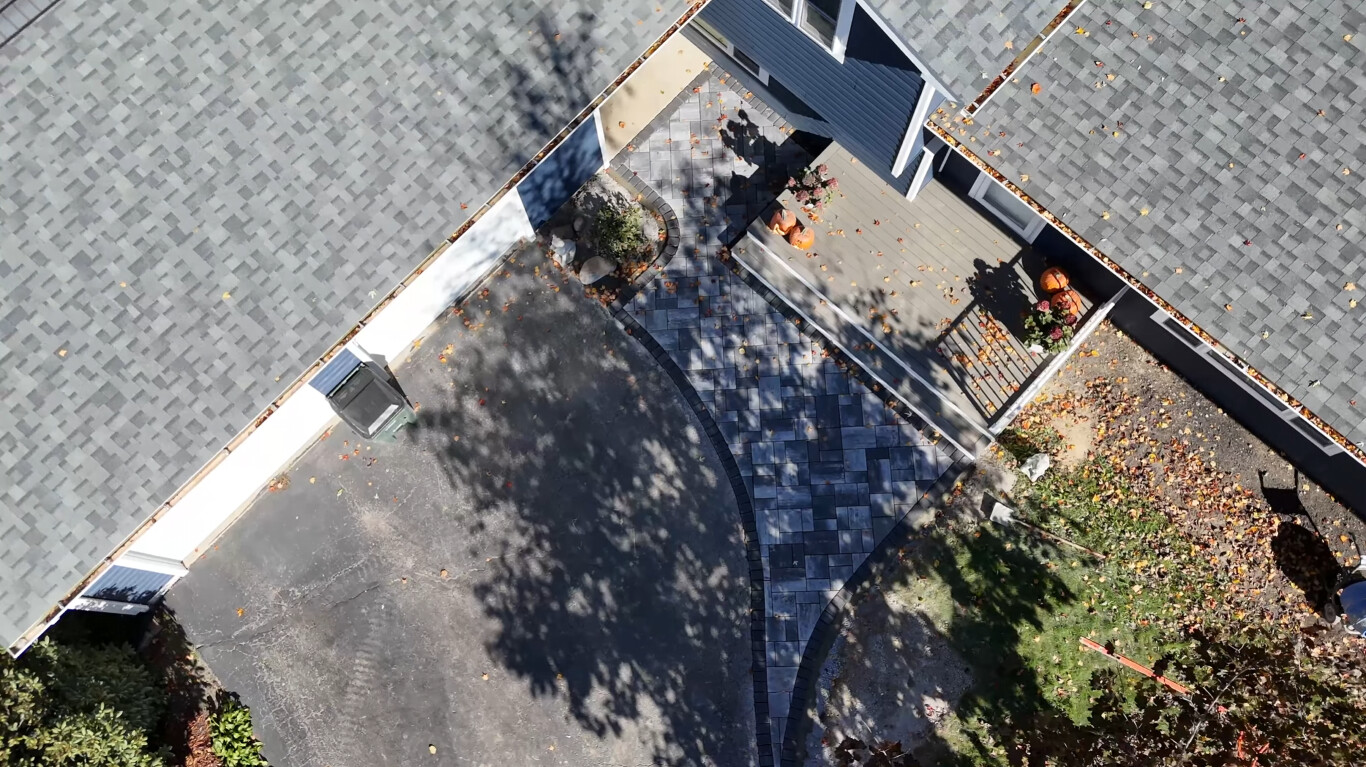
Front walkways and entryways benefit from stamped concrete because first impressions matter. A stamped walkway looks intentional and upscale compared to plain concrete or asphalt. You can match or complement your home's exterior materials, creating a cohesive look from the curb to your front door. Many homeowners add a stamped border to their driveway for extra visual interest without the cost of stamping the entire surface.
Commercial properties use stamped concrete for entrances, outdoor dining areas, and courtyards. The professional appearance impresses customers while the durability handles heavy foot traffic. The low maintenance requirement matters even more for commercial applications because there is no time to constantly repair or replace damaged surfaces.
How We Create Stamped Concrete Surfaces
The installation process for stamped concrete requires precise timing and skilled finishing. We start with the same foundation work as any concrete patio or driveway: proper excavation, base preparation, and reinforcement. The difference comes after we pour the concrete.
Color gets added in one or both of two ways. Integral color mixes into the concrete before pouring, giving the entire slab a base color. Color hardener gets broadcast onto the surface after pouring, adding depth and variation to the final appearance. We often use both methods together, with the integral color providing a consistent base and the hardener creating highlights and lowlights that make the pattern look more realistic.
Stamping happens when the concrete reaches the perfect consistency. Too soft and the stamps sink too deep. Too hard and the pattern will not imprint properly. Our crew has the experience to know exactly when to start stamping. We carefully place stamps across the entire surface, creating a continuous pattern. Release agents prevent the stamps from sticking to the concrete and add subtle color variation that mimics natural stone.
After stamping, the concrete needs time to cure. We apply a curing agent to prevent moisture loss. Once the concrete has cured sufficiently, we clean the surface and apply a protective sealer. This sealer protects against stains, enhances the colors, and makes the surface easier to clean. You will need to reseal every 2 to 3 years to maintain the appearance and protection, but this is a simple process that takes just a few hours.
Common Questions About Stamped Concrete
Stamped concrete can be slippery if it has a smooth finish and glossy sealer, but we take steps to prevent this. Most stamp patterns have enough texture to provide good traction. For areas that might get wet often, like pool decks or walkways, we use slip-resistant sealers that maintain traction even when the surface is wet. You can also request additional texture during installation. The key is choosing the right combination of pattern, sealer type, and texture for your specific application. We discuss these factors during planning to ensure your stamped concrete is both beautiful and safe.
Some fading is natural with any outdoor surface exposed to UV rays and weather, but proper maintenance keeps stamped concrete looking vibrant for decades. Integral color mixed throughout the concrete does not fade because it goes all the way through the slab. Surface colors and hardeners can lighten slightly over the first year as they weather in, but this stabilizes after that initial period. Regular resealing every 2 to 3 years protects the color and can actually refresh the appearance. We use high-quality color products designed for outdoor use in our climate. Most of our stamped concrete installations from 15 or 20 years ago still look great because the homeowners maintained the sealer.
Concrete can develop cracks despite our best efforts, which is why we place control joints strategically within the pattern. These joints encourage any cracking to happen along pattern lines where it blends in and becomes nearly invisible. If a random crack does occur, we can repair it by routing out the crack, filling it with color-matched material, and resealing. The repair technique depends on the crack size and location. Small cracks often become less noticeable over time as the concrete weathers and the colors blend. Proper base preparation, adequate thickness, and correct installation technique minimize the risk of problematic cracks. The stamped concrete we install typically performs just as well as regular concrete in terms of cracking, but looks much better.