Concrete Steps & Stairs
Build safe, durable steps that provide reliable access to your home for decades.
Why Concrete Makes the Best Steps and Stairs
Your steps might be the most important safety feature on your property. Everyone uses them multiple times every day, in all weather conditions, while carrying groceries or packages, sometimes in the dark. Steps need to be solid, stable, and reliable. Concrete delivers on all these requirements better than wood, stone, or metal alternatives. A properly built concrete stairway will not rot, rust, shift, or develop weak spots that create safety hazards.
Western New York weather tests outdoor steps harder than most homeowners realize. Freeze-thaw cycles stress materials repeatedly all winter long. Ice and snow create slippery conditions that demand good traction. Rain and melting snow need somewhere to go without pooling on landing areas. Wood steps rot and warp. Stone steps can settle unevenly or have individual treads shift. Metal steps rust and conduct cold, making them extra slippery. Concrete handles all these challenges without requiring constant maintenance or repairs.
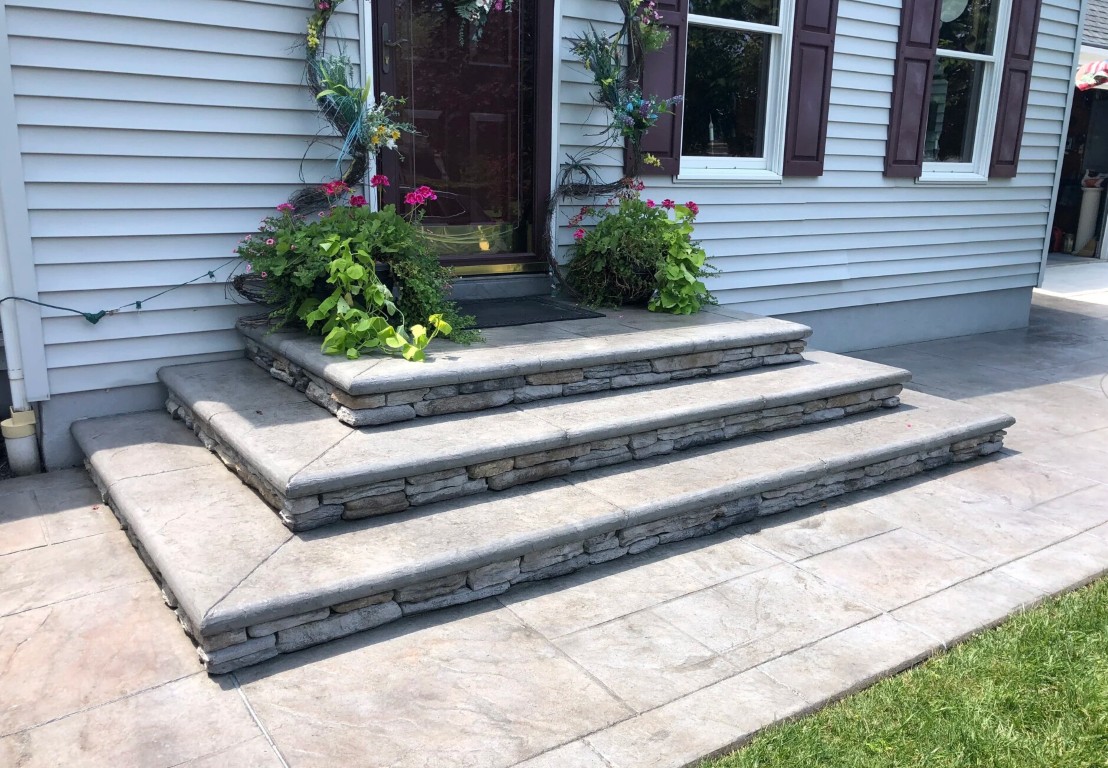
Beyond safety and durability, concrete steps offer design flexibility. We can build straight runs, curved stairs, or steps with integrated landings and walls. You can choose from various finishes including broom texture for traction, exposed aggregate for a decorative look, or stamped patterns that mimic natural stone. Railings can be integrated during construction or added later. When designed properly, concrete steps enhance your home's curb appeal while providing the safe, permanent access your Amherst property needs.
Building Codes and Safety Requirements
Stairs are not something you can just eyeball and pour. Building codes specify exact dimensions for riser height, tread depth, width, and landing sizes. These requirements exist because proper proportions make stairs safe and comfortable to use. Steps that are too steep, too shallow, or inconsistent in their dimensions create trip hazards. We follow all applicable codes to ensure your steps pass inspections and, more importantly, provide safe access for everyone who uses them.
Key code requirements for residential steps:
- •Maximum riser height of 7.75 inches ensures comfortable climbing
- •Minimum tread depth of 10 inches provides adequate foot space
- •Consistent riser and tread dimensions throughout the run
- •Minimum 36-inch width for single-family homes
- •Handrails required for stairs with four or more risers
- •Proper slope on landings to prevent water pooling
Handrail requirements deserve special attention because they directly impact safety. When required, handrails must be graspable, at the correct height, and sturdy enough to support someone who grabs them while falling. We can install metal railings as part of your step project or leave sleeves and anchors in the concrete for railings you add later. Either way, we make sure the mounting points meet code and provide solid attachment.
Landing areas also have specific requirements. You need a landing at the top and bottom of your stairs, and these landings must be at least 36 inches deep in the direction of travel. This gives people room to open doors and step onto the stairs safely. We calculate these dimensions as part of the design process so your steps work with your doorways and yard layout while meeting all code requirements.
Our Step Installation Process
Building concrete steps starts with careful planning and layout. We measure the total rise from bottom to top and calculate the number of steps needed to meet code requirements. This determines the exact dimensions for each riser and tread. Getting this calculation right at the start prevents problems later. We also plan for proper drainage, ensuring water flows off the steps and landings rather than pooling or running back toward your door.
The foundation for your steps needs to extend below the frost line just like any other concrete structure. We excavate and pour footings that provide stable support and prevent frost heaving. This is especially critical for front entry steps that tie into your home's foundation. Skipping proper footings leads to settling and separation from the house, creating gaps and trip hazards.
Forming and pouring happens next. We build precise forms that create the exact step dimensions we calculated. Reinforcement steel gets placed to strengthen the structure, especially important for cantilevered steps or stairs with integrated walls. When we pour the concrete, timing the finish is critical. We want enough texture for traction but not so rough that the surface is uncomfortable or difficult to clean. The edges get rounded slightly to prevent chipping. If you are also planning walkways or patio work, we coordinate everything so your outdoor concrete elements work together as a cohesive system.
Common Questions About Concrete Steps
Yes, we regularly replace deteriorated steps while leaving the foundation and house undisturbed. We carefully remove the old steps, prepare proper footings, and pour new steps that tie into your foundation properly without causing any damage. The key is doing the demolition carefully and making sure the new steps connect to the existing structure correctly. If your foundation has issues, we will let you know, but in most cases we can replace steps as a standalone project without affecting anything else.
Proper texture is the first line of defense against slippery steps. We apply a broom finish or light brush texture that provides traction without being uncomfortable to walk on. This texture works year-round but especially helps in wet or icy conditions. Proper drainage matters too because steps that shed water quickly are less likely to ice over. Some homeowners also add grip strips or apply non-slip coatings for extra traction. The slope on landing areas is critical as well. We make sure water runs off rather than pooling where it can freeze into an ice rink.
Properly built concrete steps typically last 40 to 60 years or more. The keys to longevity are adequate footings below the frost line, proper thickness and reinforcement, good drainage, and correct finishing techniques. Steps that were built correctly decades ago are often still in service with minimal maintenance. You might need to seal them every few years and repair minor edge chips, but the structure remains solid. Steps that fail prematurely usually have inadequate footings, insufficient reinforcement, or drainage problems that allow water to freeze behind or under the concrete. When we build steps, we use techniques proven to last in our climate.