
Concrete Driveways
Get a durable, long-lasting driveway that handles heavy vehicles and harsh weather for decades.
Why Concrete Driveways Make Sense in Western New York
Your driveway takes more abuse than any other part of your property. Heavy vehicles, snow plows, road salt, freeze-thaw cycles, and constant traffic all take their toll. Concrete handles this punishment better than asphalt or gravel, which is why so many Amherst homeowners choose concrete for new driveways and replacements.
A properly installed concrete driveway lasts 30 to 40 years or more with minimal maintenance. You will not deal with the cracks and potholes that plague asphalt driveways, or the ruts and washouts common with gravel. Concrete holds up to snow plows without gouging or tearing. It does not develop soft spots in summer heat. And it keeps your vehicles cleaner because you are not tracking loose stones or asphalt dust into your garage or house.
The upfront cost of concrete runs higher than asphalt, but the math shifts when you factor in longevity and maintenance. Asphalt driveways need sealing every few years and often require resurfacing after 15 to 20 years. Concrete needs virtually no maintenance beyond occasional cleaning. Over the life of your driveway, concrete actually costs less. Plus, a well-maintained concrete driveway adds to your home's resale value. Buyers recognize quality when they see it, and a solid concrete driveway signals that your home has been well maintained.
How We Install Your Concrete Driveway
The foundation determines whether your driveway lasts 40 years or starts cracking in 5. We excavate to the proper depth, remove any organic material or soft soil, and install a compacted gravel base. This base provides drainage and prevents settling. The thickness of this base depends on your soil conditions, but we typically use 6 to 8 inches of compacted stone for residential driveways in the Amherst area.
Critical elements of a quality concrete driveway:
- •Proper excavation and removal of unsuitable soils
- •Compacted gravel base for stability and drainage
- •Minimum 5-inch concrete thickness (6 inches for heavy vehicles)
- •Steel reinforcement throughout the entire slab
- •Control joints every 10 feet to manage cracking
- •Proper slope for water drainage away from garage and house
- •Broom finish for traction in wet or icy conditions
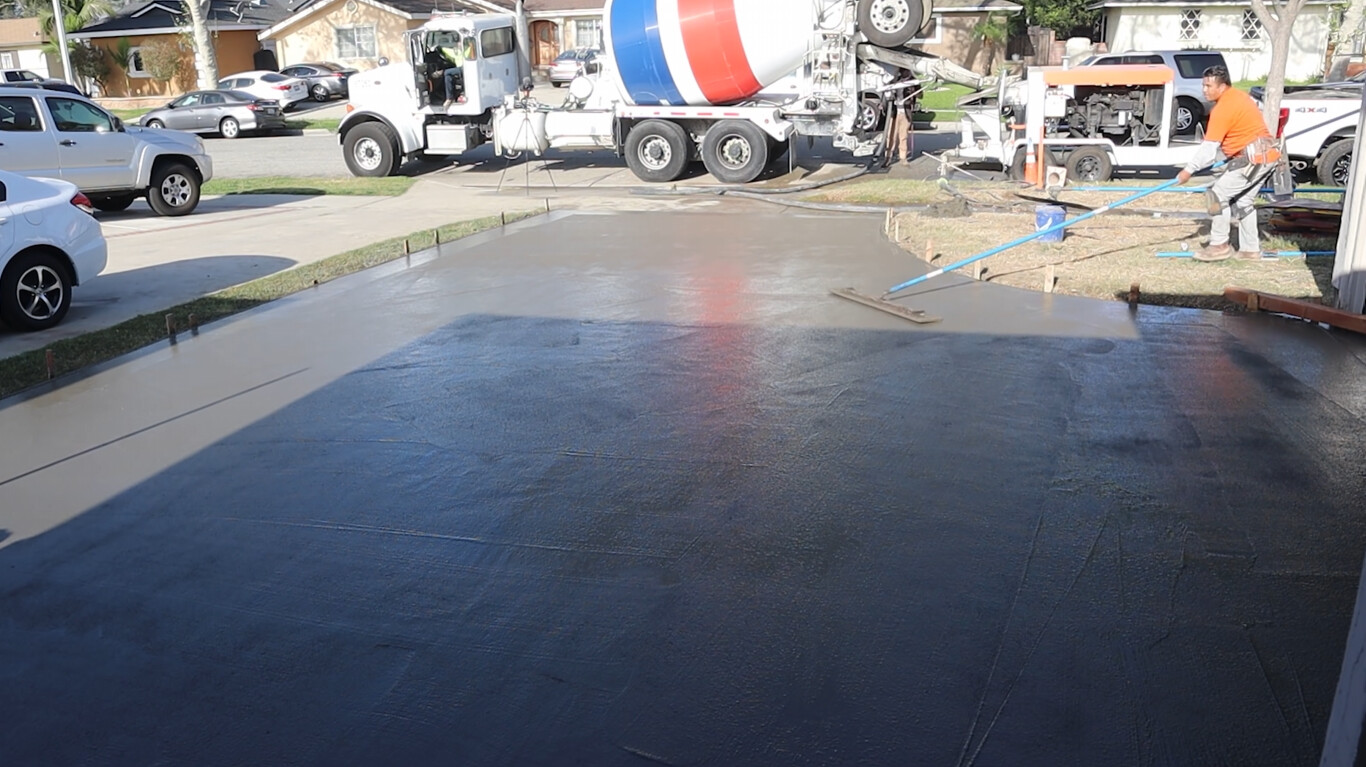
We pour the concrete in sections if needed, but always in a way that creates a strong, unified slab. Our crew works quickly to place and finish the concrete while it is still workable. We use a bull float to level the surface, then apply a broom finish for traction. This textured surface helps prevent slipping when the driveway is wet or icy. After finishing, we saw-cut control joints to direct any cracking to predetermined locations where it will not be visible or cause problems.
Driveway Design and Layout Considerations
The layout of your driveway affects both functionality and curb appeal. We help you determine the right width based on your vehicles and property. A single-car driveway needs a minimum of 10 feet, but 12 feet works better for larger vehicles or if you park at an angle. Two-car driveways should be at least 20 feet wide. If you have trucks or SUVs, going wider makes daily use much easier.
Turnarounds and parking areas require careful planning. We can design a circular drive, add a parking pad, or create a wider apron near your garage. These features improve traffic flow and give you space for additional vehicles when you have guests. The investment in extra concrete now saves you from tearing up lawn or dealing with cars parked awkwardly.
Aesthetics matter too. While most driveways use a standard broom finish in natural gray concrete, you have options. We can add a colored border, create a contrasting apron, or pour the entire driveway in an integral color. Some homeowners choose stamped or decorative finishes for a more upscale look. We also coordinate with existing concrete elements like sidewalks and walkways to create a cohesive appearance.
Common Questions About Concrete Driveways
We recommend waiting at least 7 days before driving on your new driveway. The concrete reaches about 70 percent of its full strength in 7 days, which is enough for normal vehicle traffic. For heavy vehicles like loaded trucks or RVs, wait a full 28 days. You can walk on the driveway after 24 hours. Driving too soon can cause surface damage and permanent tire marks. We know it is inconvenient, but giving the concrete time to cure properly ensures your driveway lasts decades without problems.
Concrete naturally wants to crack as it cures and responds to temperature changes. That is why we install control joints every 10 feet. These joints create weak points where the concrete will crack in a straight line that we control, rather than random cracks across your driveway. When properly installed with good base preparation and adequate thickness, these controlled cracks stay tight and do not cause problems. Random cracking usually happens because of poor base preparation, inadequate thickness, or missing control joints. We take the time to do it right so your driveway performs as expected.
Sealing is optional but recommended, especially in our climate. A good concrete sealer protects against water penetration, salt damage, and staining from oil or other fluids. We suggest waiting at least 30 days after installation before applying the first coat of sealer. After that, reseal every 2 to 3 years for best results. The sealer does not prevent normal wear, but it does help your driveway resist the effects of freeze-thaw cycles and deicing chemicals. If you skip sealing, your driveway will still last for decades, but sealing extends its life and keeps it looking better longer.